.png)
Best Bookkeeping Setup for Amazon Sellers in 2026
- Prothom
- Dec 17, 2025
- 4 min read


Selling on Amazon in 2026 is no longer just about listing products and running ads. It is about running a real, scalable business with strong financial systems behind it. As competition increases and Amazon continues to add more fee policies and reporting layers, having the right bookkeeping setup is not optional anymore. It is the foundation that determines whether your business grows profitably or struggles silently.
A proper bookkeeping setup gives Amazon sellers clarity, control, and confidence. It helps you understand exactly where your money is coming from, where it is going, and how much you are truly earning after all costs. Without this clarity, even high-revenue stores can lose money.

The Importance of Proper Bookkeeping for Amazon Sellers
Bookkeeping is the process of recording, organizing, and maintaining all financial transactions of your business. For Amazon sellers, this includes sales fees, refunds, advertising costs, inventory purchases, shipping taxes, and reimbursements.
In 2026, Amazon sellers deal with a complex fee structure, frequent payouts, and multi-channel expansion. Without a structured bookkeeping system, sellers often rely on Amazon dashboards alone, which do not show true profitability. Amazon reports revenue, not profit. Proper bookkeeping bridges that gap and turns raw data into actionable insights.
Good bookkeeping also protects you during tax season audits and investor discussions. It ensures compliance while helping you plan for growth with real numbers, not assumptions.

Building the Right Foundation from Day One
The best bookkeeping setup always starts with separating business and personal finances. A dedicated business bank account creates clean records and avoids confusion. When every Amazon payout expense and tax payment flows through one account, your financial data becomes easier to manage and more accurate.
Once your bank account is set up, the next step is choosing the right accounting software. In 2026 cloud cloud-based accounting platforms are essential. These systems allow real-time access, automation, and easy collaboration with accountants or finance teams. The right software should be scalable, secure, and compatible with e-commerce integrations.
However, software alone is not enough. Amazon sellers require proper data mapping to ensure that every sale fee, refund, and adjustment is recorded correctly. This is where integrations play a critical role.

Automating Amazon Financial Data the Smart Way
Amazon does not pay sellers per order. It pays in settlement cycles after deducting multiple fees. This makes manual bookkeeping inaccurate and time-consuming. The best setup in 2026 relies heavily on automation tools that pull Amazon settlement data and translate it into clean accounting entries.
Automation ensures that revenue is accurately recorded, fees are properly categorized, and refunds do not distort income. This eliminates guesswork and allows sellers to see accurate profit figures instead of inflated revenue numbers.
Automation also reduces human error, which becomes more costly as your order volume increases. A scalable Amazon business cannot rely on spreadsheets forever.

E-commerce Focused Accounting Structure
Amazon's bookkeeping differs from that of traditional service-based businesses. Your chart of accounts must be designed specifically for e-commerce. It should clearly separate product revenue, advertising expenses, Amazon fees, shipping costs, and cost of goods sold.
Cost of goods sold is especially important for Amazon sellers. In 2026, inventory costs fluctuate frequently due to sourcing, shipping, and storage changes. Without proper cost tracking, sellers often overestimate profits and underprice their products.
A well-structured bookkeeping system allows you to see profit by product, market, and time period. This insight helps you optimize pricing, advertising, a nd inventory decisions.
Inventory Tracking and Cost Accuracy
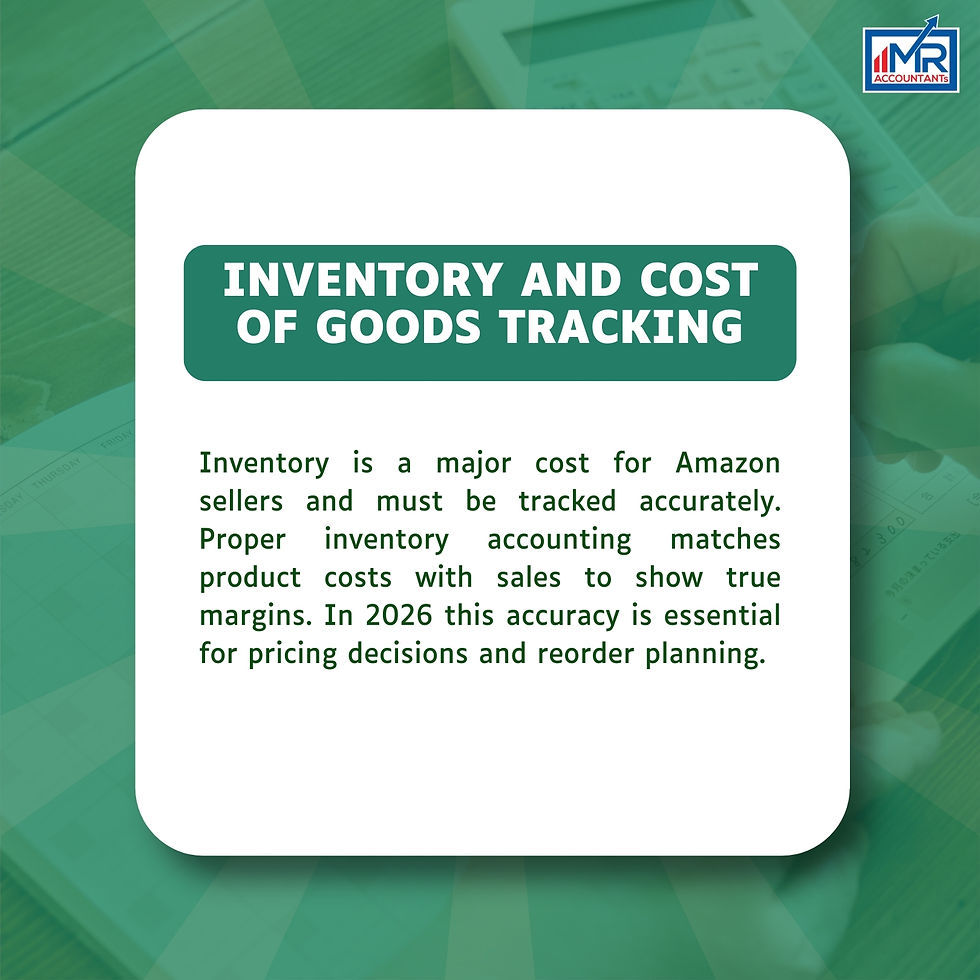
Inventory is the heart of every Amazon business. Poor inventory accounting leads to inaccurate profits, cash flow issues, and tax problems. The best bookkeeping setup ensures that inventory purchases are tracked correctly and costs are matched with sales.
In 2026, sellers often operate across multiple marketplaces, fulfillment methods, and warehouses. A strong bookkeeping system accounts for inventory movement losses and adjustments without creating confusion.
Accurate inventory accounting helps sellers understand true margins, avoid overstocking, and plan reorders with confidence.

Regular Reconciliation and Financial Review
Bookkeeping is not a one-time setup. It requires consistent review and reconciliation. Matching your accounting records with Amazon settlements and bank statements ensures accuracy and prevents costly surprises.
Monthly financial reviews are critical. They help you understand trends, identify rising costs, and measure the effectiveness of advertising campaigns. Sellers who review their books regularly make faster and better decisions.
In 2026, successful Amazon sellers treat financial reports as decision-making tools, not just compliance documents.

The Role of Professional Support in 2026
As Amazon businesses grow, bookkeeping becomes more complex. Tax regulations change, marketplaces expand, and financial strategies evolve. Working with professionals who understand Amazon and ecommerce accounting saves time and reduces risk.
Many sellers in 2026 choose offshore bookkeeping teams or specialized ecommerce accountants to manage daily records while focusing on growth. This approach provides expertise at a lower cost and ensures books are always up to date.
Professional support also helps with tax planning, cash flow forecasting, and long-term financial strategy.
Final Thoughts
The best bookkeeping setup for Amazon sellers in 2026 is automated, structured, and designed specifically for e-commerce. It combines the right software, smart integrations, accurate inventory tracking, and consistent financial review.
Sellers who invest in proper bookkeeping gain clarity, control, and confidence. They know their numbers, understand their margins, and scale their businesses profitably.


Comments