
The Essential Role of Human Judgment in an Automated World
In today’s world, automation is everywhere. From finance to marketing to customer service, almost every industry now relies on systems, software, and AI to make work faster and more efficient. Indeed, automation has transformed how we operate. It saves time, reduces manual errors, and allows teams to focus on more strategic work. However, there’s one thing automation can’t replace: human judgment. While machines can process data, they cannot understand the meaning behind it.
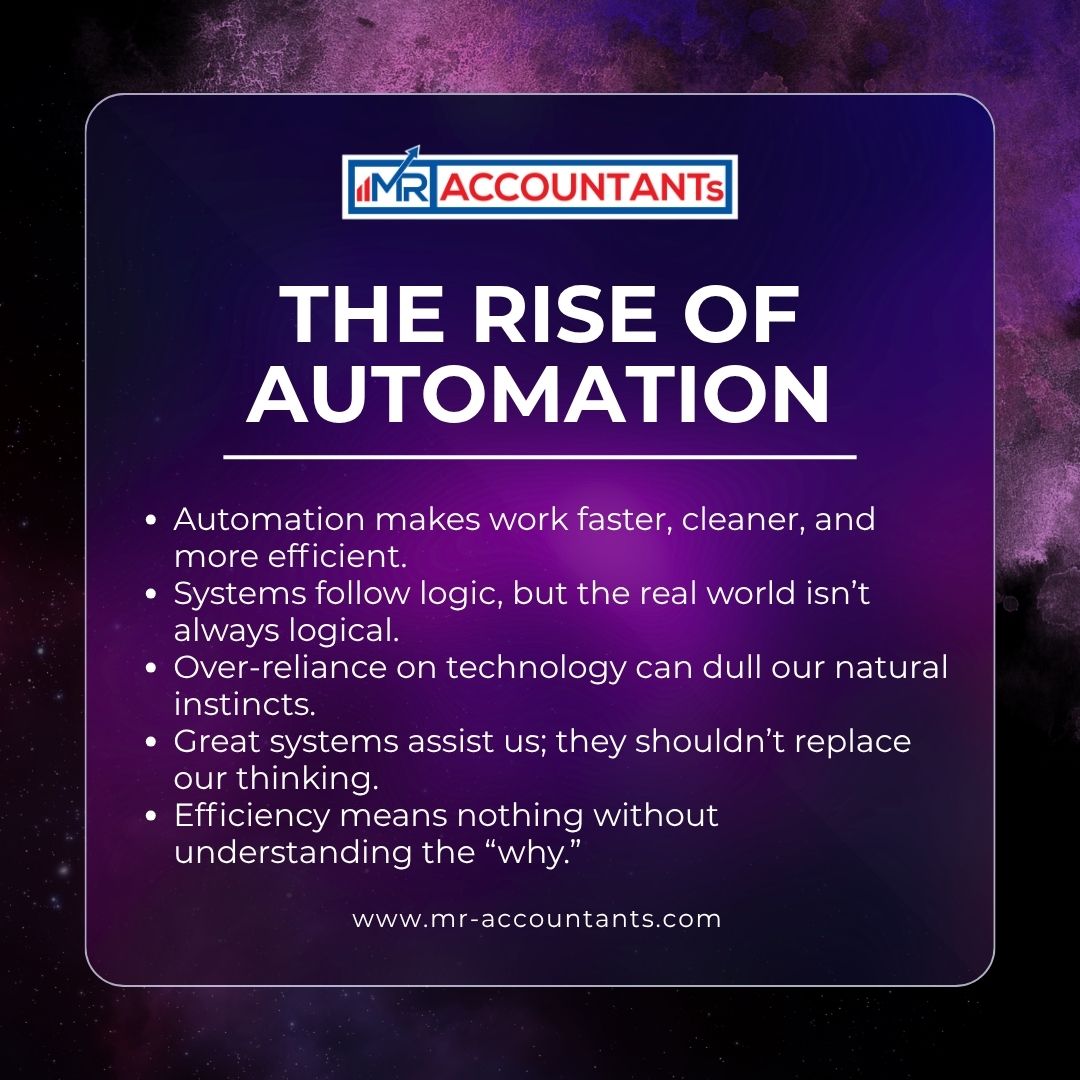
The Rise of Automation in Business
Technology has given us tools that can handle thousands of tasks in seconds. Accounting software reconciles transactions automatically, AI tools generate reports, and chatbots handle basic customer queries without any human help. These tools are incredible; they save businesses both time and money. But there’s a catch.
When we depend too much on automation, we risk switching off our ability to think critically. Automation works based on preset logic. It follows instructions exactly as designed. However, real-world business decisions are rarely that simple. Things change. Markets shift. Human behavior doesn’t always follow predictable patterns. That’s where judgment and reasoning come in.
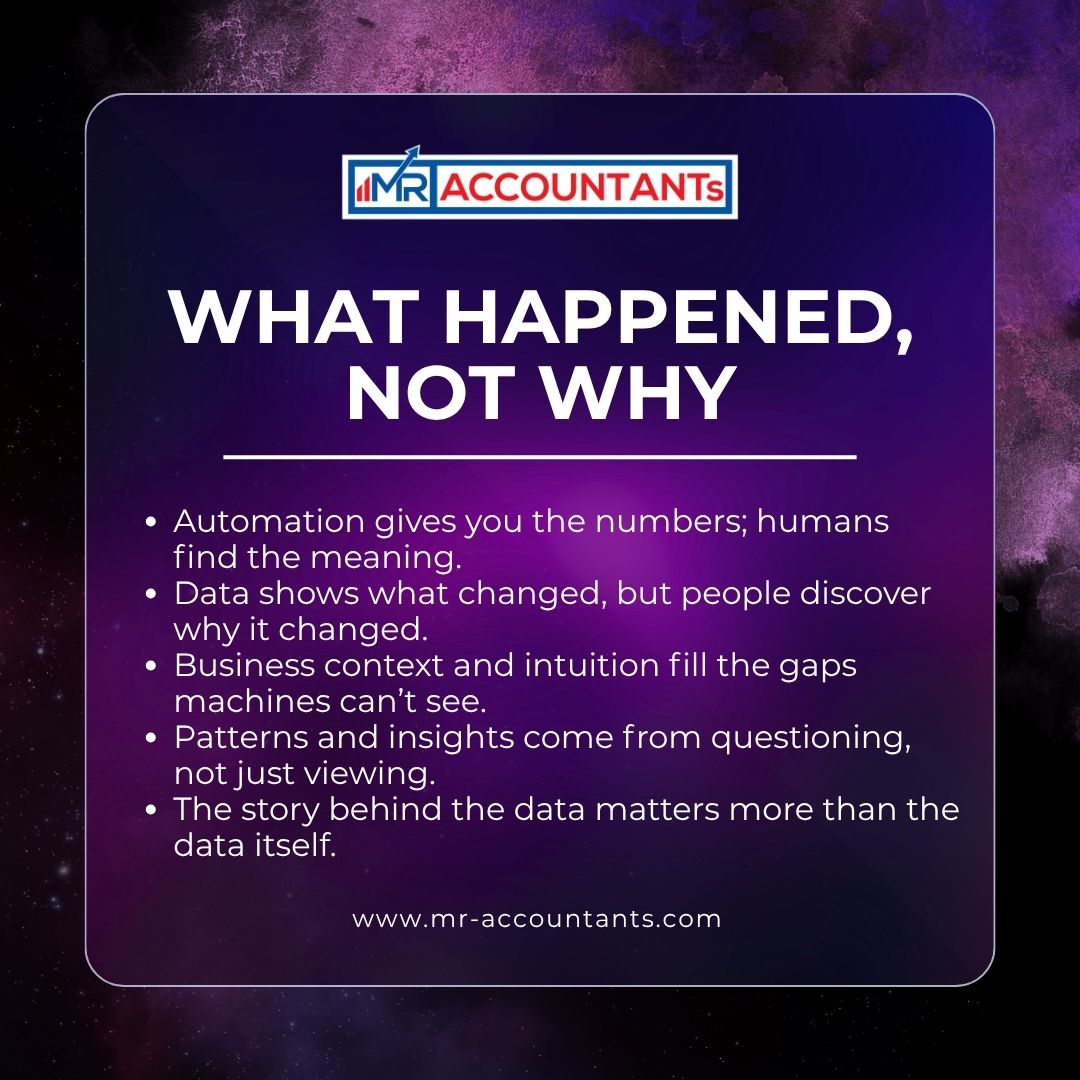
Data Can Tell You What Happened, Not Why
Let’s take an example. Imagine your business revenue suddenly drops this quarter. Automation tools will quickly show the numbers — sales decreased by 12%, marketing expenses increased, and profit margins tightened. But will the system tell you why this happened? No. That’s your job. It might be due to a seasonal trend, a change in customer behavior, or a competitor’s new campaign. Only human insight can connect these dots and understand the deeper cause behind the numbers. Automation shows you the data; humans find the story.
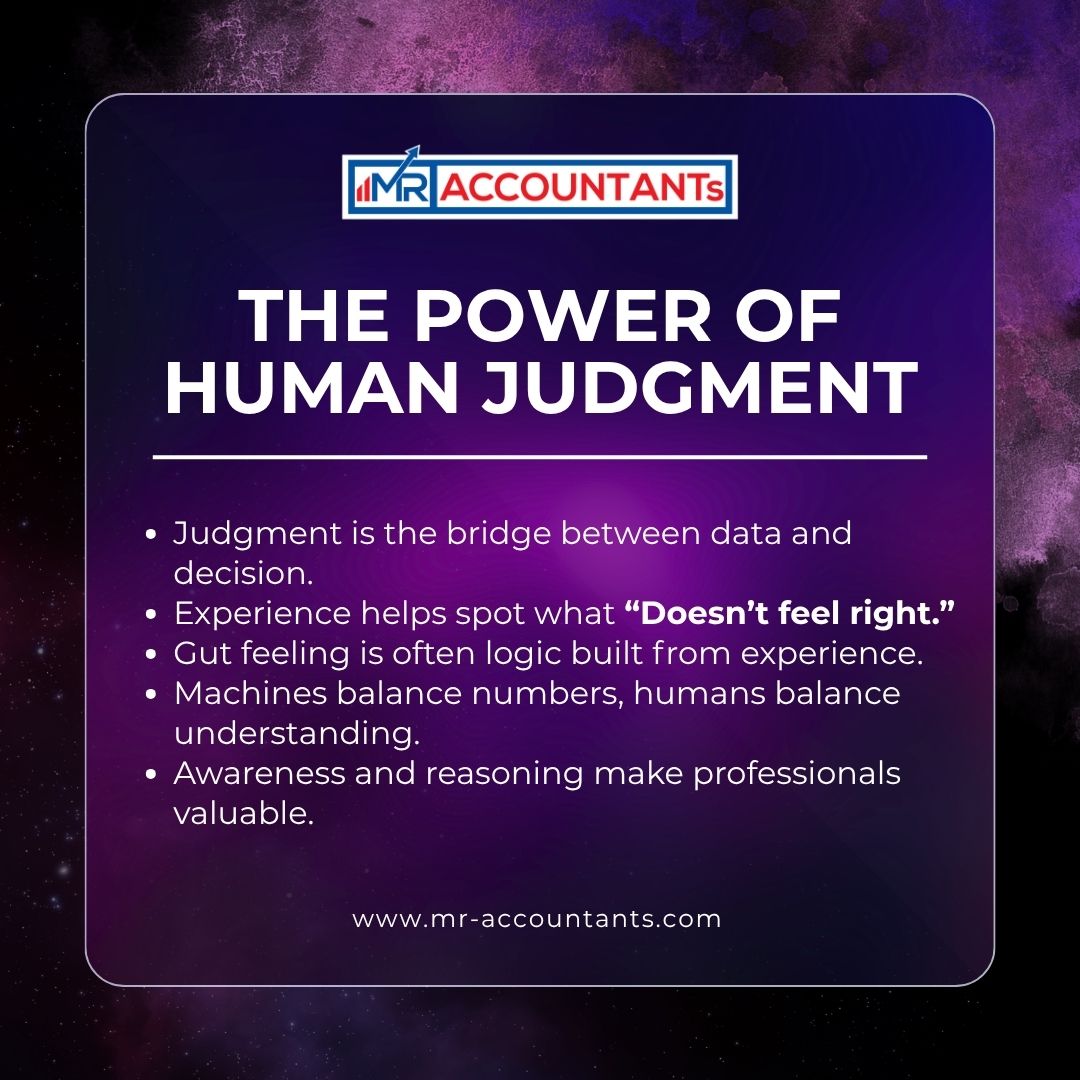
The Power of Human Judgment
Judgment is more than just spotting errors. It’s about understanding patterns, sensing risks, and evaluating what makes sense based on experience and logic. A system might tell you that an account balances perfectly, but an experienced person can notice something that feels off. Perhaps a client’s expenses don’t match their usual pattern, or the profit margins seem too high to be realistic.
That “gut feeling” isn’t magic — it’s the brain combining knowledge, logic, and experience. This kind of awareness is something automation can never have.
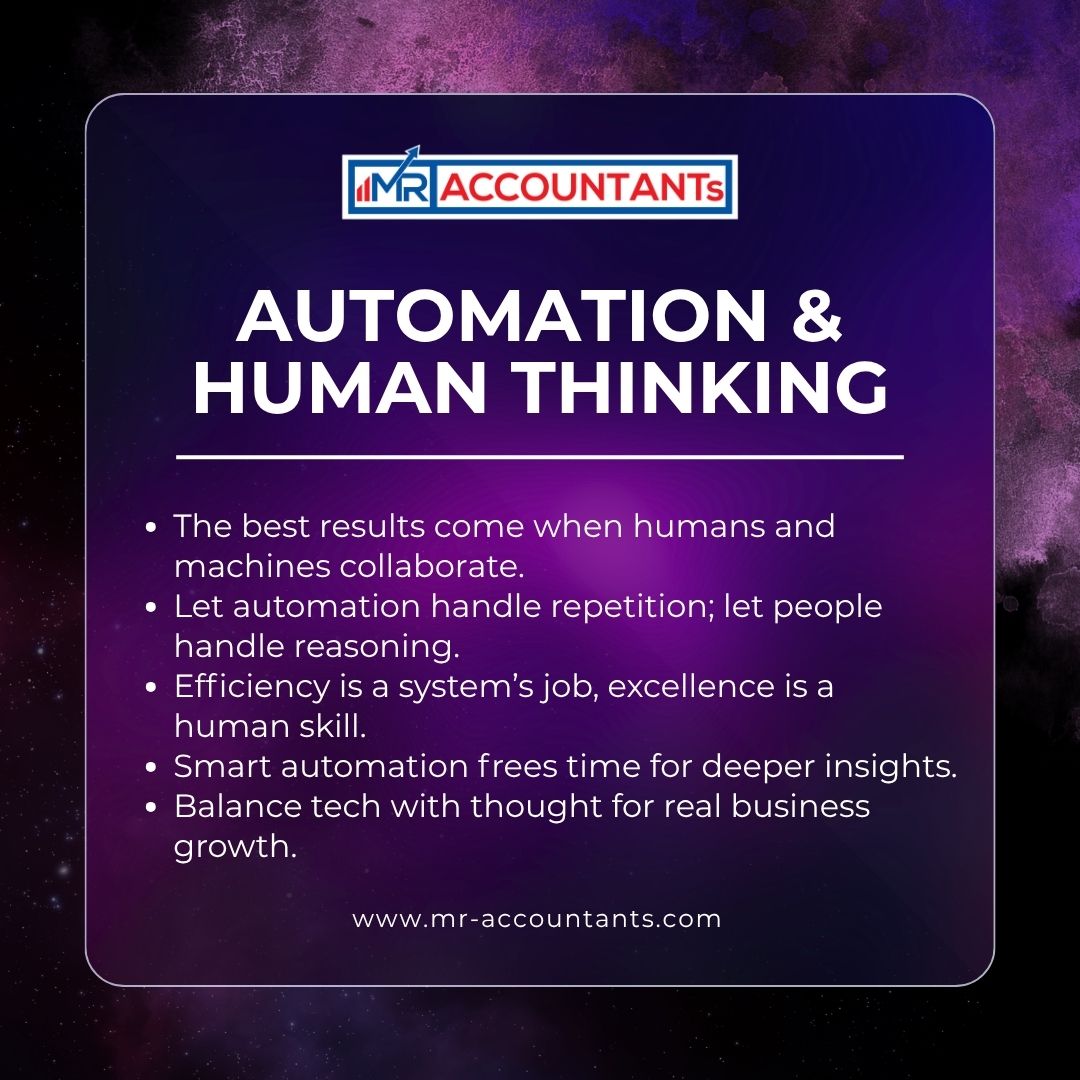
Automation + Human Thinking = Excellence
The smartest businesses today don’t choose between automation and human intelligence; they combine them. Automation handles repetitive and mechanical tasks, such as:
Data entry
Reconciliations
Report generation
Notifications and reminders
Humans, on the other hand, manage tasks that require understanding and interpretation, including:
Making business decisions
Analyzing trends
Understanding client needs
Spotting red flags
When both work together, efficiency meets excellence.
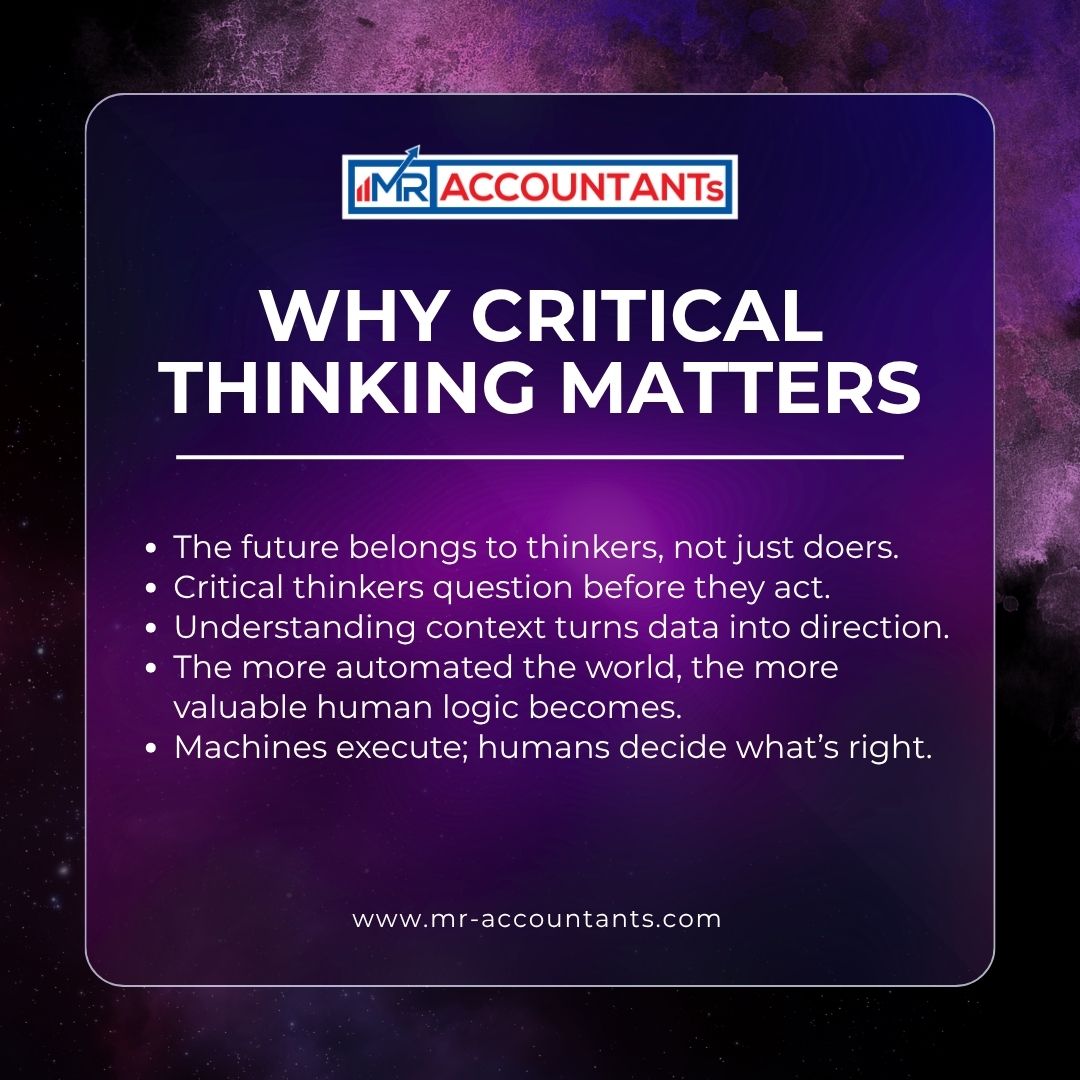
Why Critical Thinking Matters More Than Ever
As automation becomes more advanced, critical thinking is becoming a top professional skill. Employers now look for people who can:
Question results instead of blindly accepting them
Use logic and reasoning before taking action
Understand the bigger business context behind data
Identify patterns and connect multiple insights
In simple terms, the more automated our world becomes, the more valuable human judgment becomes. Machines can do what we tell them, but only people can decide what’s right.
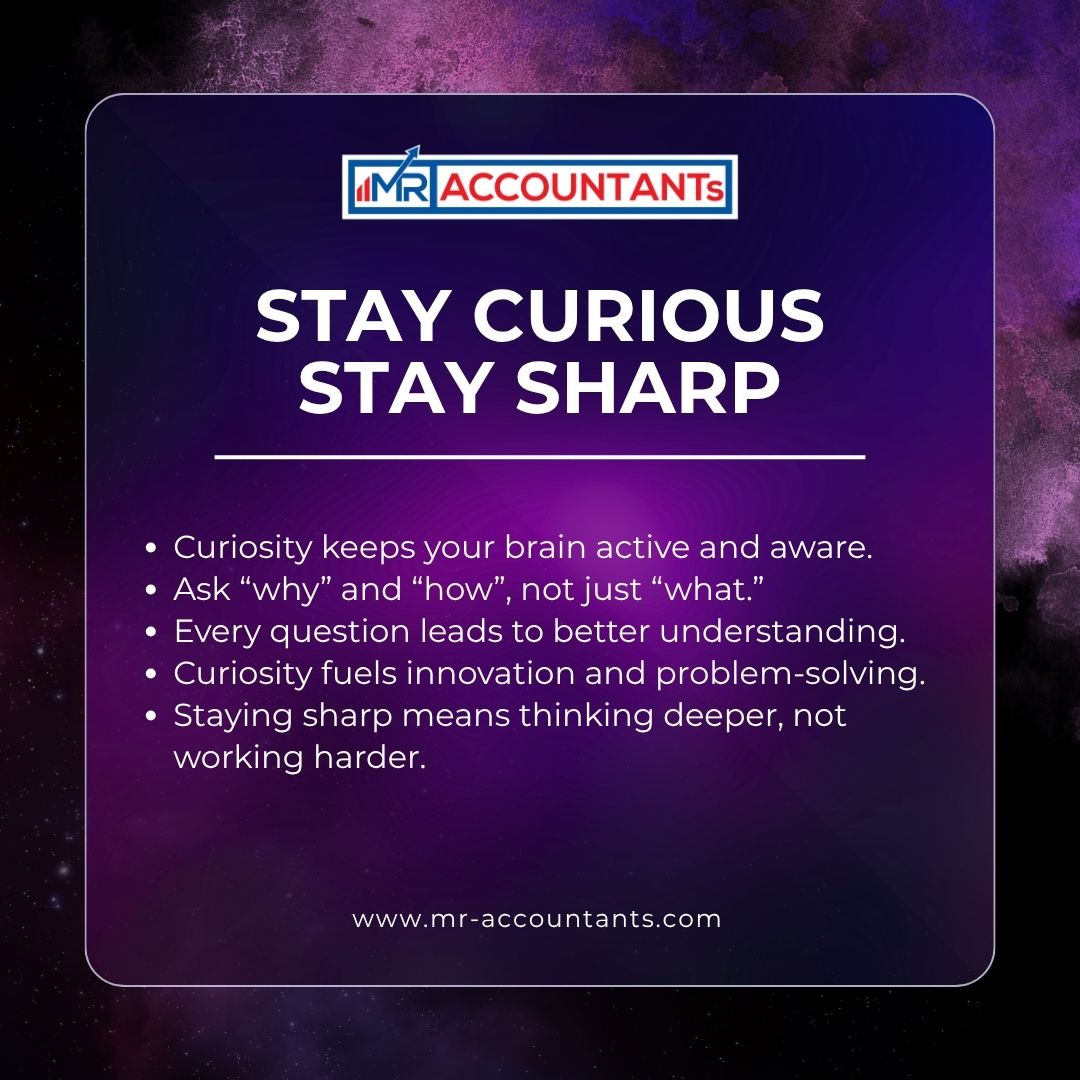
Stay Curious, Stay Sharp
In the age of automation, one of the most underrated skills is curiosity. It’s not about knowing all the answers; it’s about wanting to understand why things happen. Curiosity keeps your mind active, alert, and engaged. It pushes you to look beyond the surface of numbers and reports. When you stay curious, you don’t just accept what the system gives you; you explore the why and how behind it.
For example:
If a report shows a sudden expense spike, don’t just record it; ask what caused it.
If sales are up, don’t stop at celebrating; understand why it happened.
If automation flags an error, don’t only fix it; understand why it happened, so it doesn’t repeat.
That habit of questioning builds expertise. Over time, it trains your brain to think faster and more strategically. You start noticing details others might miss, such as small inconsistencies, unusual trends, or hidden opportunities.
Curiosity also fuels innovation. Every great improvement starts with a simple question: “Can this be done better?” This mindset keeps professionals relevant in a world where tools and technology are always changing. Systems can be upgraded with new versions, but curiosity is what upgrades you.
Whenever you’re working with automation, whether it’s reviewing a report, analyzing data, or verifying results, pause for a second and ask yourself:
“Does this make sense?” “What’s the story behind this data?” “Can I find a smarter way to do this next time?”
Those small moments of reflection are where true learning happens. Staying sharp doesn’t mean working harder; it means thinking deeper. Curiosity is the spark that keeps your thinking alive.
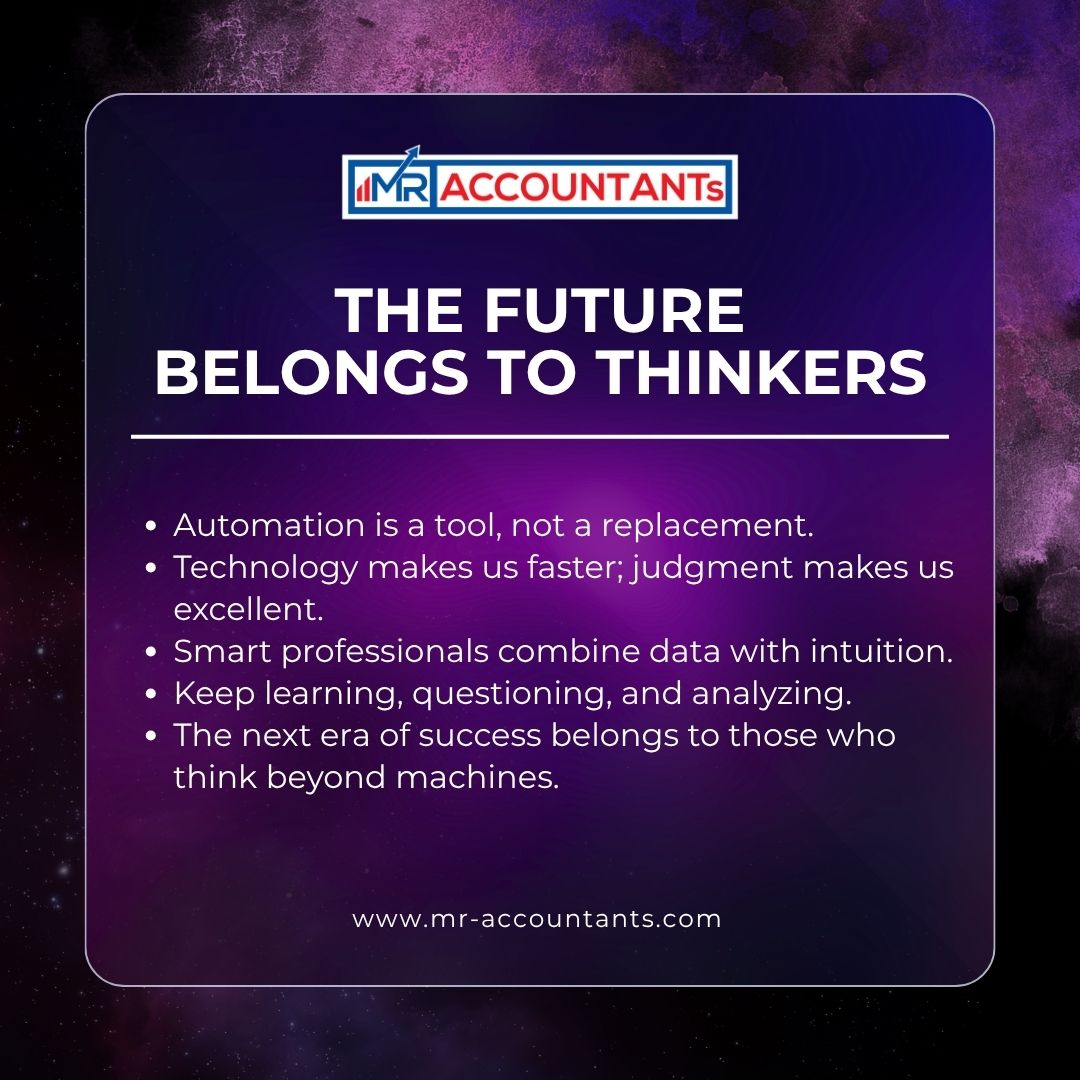
The Future Belongs to Thinkers
Automation will continue to grow, and that’s a good thing. However, the future doesn’t belong to those who rely only on machines. It belongs to those who use technology wisely and think beyond what’s on the screen. Keep your systems running efficiently, but keep your brain switched on. Question, analyze, and connect the dots. Technology can make us faster, but only judgment makes us excellent.
Conclusion
Automation is not our competition; it’s our partner. But like any good partnership, balance is key. Let automation handle the routine, and let your judgment, experience, and critical thinking handle the rest. That’s how we move from being doers to being decision-makers. That’s how we build a smarter, stronger, and more human future.